Thinking in Decades, Not Headlines
Trump, like Reagan, stakes his legacy on the long game of economic revival.

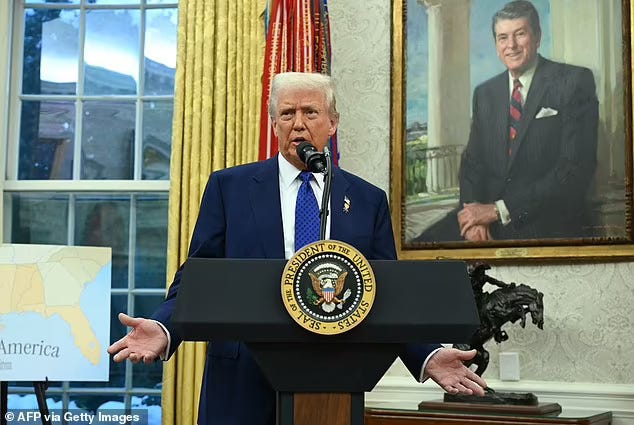
History tends to repeat itself—especially when bold leadership confronts economic orthodoxy and political resistance. In 1981, Ronald Reagan inherited a nation paralyzed by inflation, soaring interest rates, and a pervasive sense of economic malaise. His solution? Tax cuts, deregulation, and a strong commitment to restraining the growth of federal government spending. Critics protested, a recession followed, and the political cost was significant. The Republican Congressman I worked for at the time nearly lost his seat in 1982. Twenty-six other Republican House members who supported Reagan were not as fortunate. But Reagan stayed the course. The long-term benefits materialized, and the Reagan boom redefined the American economy for a generation.
Fast forward four decades and Donald J. Trump is following a similar path, albeit in very different times and circumstances. While Reagan faced a stagflation-ridden economy, Trump has inherited a sluggish post-COVID recovery—low in unemployment, certainly, but lacking in wage growth, productivity, and business investment. His response? Reaganesque. Tax cuts, deregulation, and strict fiscal discipline, combined with an unapologetic focus on American manufacturing, energy independence, and domestic resilience.
Just as Reagan's early years were roundly criticized for causing short-term pain, Trump’s first 100 days have faced a familiar and fierce chorus of opposition. However, beneath the noise, his economic strategy reflects Reagan's core insight: sometimes, you must endure near-term discomfort to achieve long-term prosperity.
The Tax Cut Parallel
Reagan’s signature Economic Recovery Tax Act of 1981 slashed individual income taxes across the board, laying the groundwork for a revival in consumer spending and investment. Similarly, Trump’s 2017 Tax Cuts and Jobs Act, currently up for renewal, lowered the corporate tax rate from 35% to 21%, spurring repatriation of capital, rising business confidence, and renewed investment in the American workforce. Critics continue to decry both tax cuts and more as giveaways to the wealthy, but the long-term payoff—growth, job creation, and expanded tax revenue from a larger economic base—paints a different picture.
Regulatory Relief and Private Sector Revival
Reagan famously declared that “government is not the solution to our problem; government is the problem.” He slashed red tape across industries, empowering private enterprise. Trump took a page from the same playbook. In the first year of his first term, Trump eliminated more regulations than any president in modern history, creating an environment that rewarded entrepreneurship and eased the burden on small and medium-sized businesses—the beating heart of the American economy. His second term doubles down on that strategy.
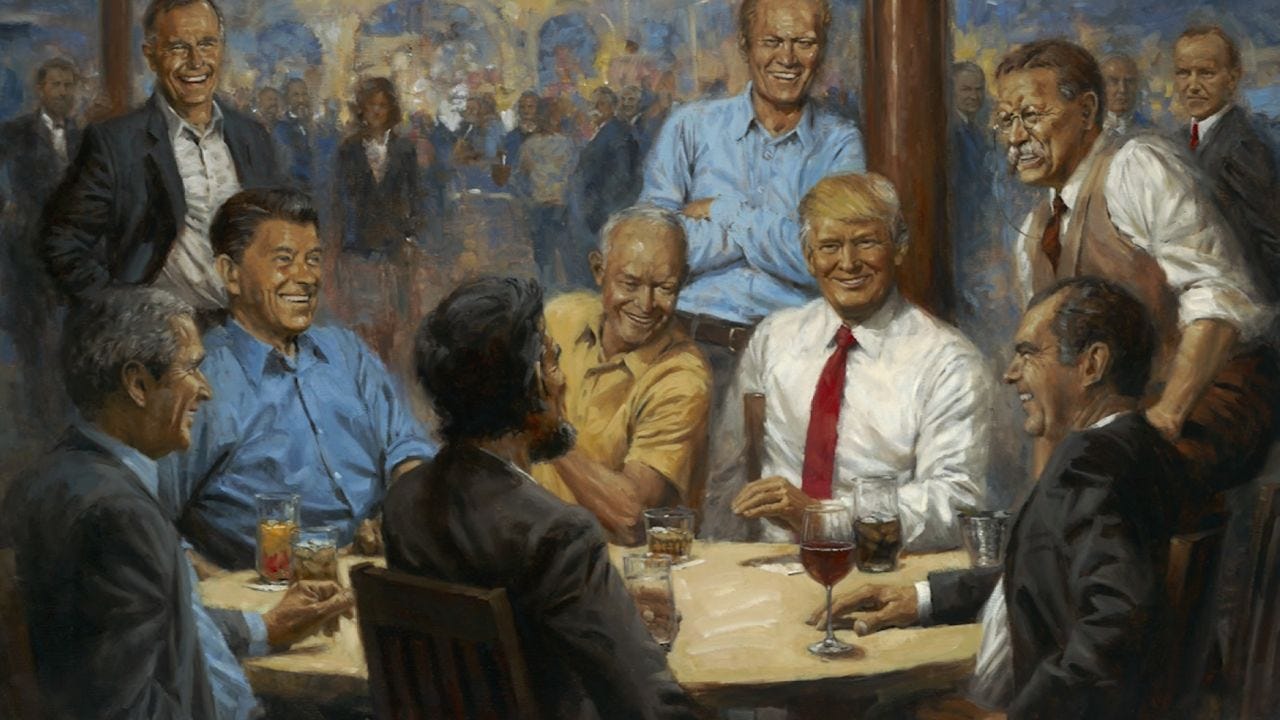
Spending Cuts: A Tough Sell, Then and Now
One of the more underappreciated parallels between Reagan and Trump is their shared belief in controlling the growth of federal spending. Reagan faced enormous pressure to keep the taps flowing, particularly from those advocating for domestic spending and entitlement programs. Likewise, Trump’s DOGE auditing efforts relentlessly push for a leaner government and the elimination of bureaucratic waste, fraud, and abuse to reduce the federal deficit and our national debt.
His attempts to bring sanity to Washington’s spending machine—from efforts to reform foreign aid to cutting unnecessary federal programs—mirror Reagan’s struggle to balance economic revitalization with fiscal responsibility. Like Reagan, Trump understands that excessive federal spending is a slow-acting poison that ultimately threatens both prosperity and liberty.
A Long-Term Lens in a Short-Term World
Both leaders recognized that restoring American strength meant thinking in decades, not in news cycles. Reagan’s policies, pilloried at the moment, gave rise to the longest peacetime economic expansion in history. Trump’s economic reset—while disrupted by a global pandemic and now kneecapped by Democratic obstruction in the courts—targets the same goal: a stronger, self-sufficient, opportunity-rich America.
Trump’s critics often accuse him of chaos and being transactional rather than strategic. However, if one steps back from the daily media frenzy and views his policies in the aggregate, a clear philosophical throughline emerges: pro-growth, pro-worker, pro-America. It’s Reaganism recalibrated for a 21st-century economy—an effort not to manage America’s decline but to reverse it.
In both cases, the courage to disrupt a stagnant status quo carried political costs. However, that’s the hallmark of transformative leadership. Reagan didn’t govern by polls, and neither has Trump. Instead, both gambled on the notion that in America, prosperity is never accidental—it is earned through tough decisions, principled conviction, and a belief in the power of free enterprise.
The legacy of that gamble is still unfolding. But if history is any guide, it’s one worth making.
https://open.substack.com/pub/johnnogowski/p/being-ahead-of-the-curve-aint-that?r=7pf7u&utm_medium=ios
Indeed... SO many 2025 parallels to Reagan's 1981 -- particularly '81's Economic Recovery Tax Act -- viewed back then as "radical" and "crazy" by Dems, plenty of Republicans like Bob Michel, and much of the media. While preferring Reagan's "supply-side" tax cut agenda and overall philosophy to Trump's tariff-happy posturing and bullying, the need to reset and rebalance today's economic world order as vital as it was 45 years ago. But Trump could help himself by better-articulating what he's doing and why. Scott Bessent emerging as most articulate 'explainer' and the more he's in the spotlight the better.