Behind the Headlines
Why tragic events are both heartbreaking and predictable

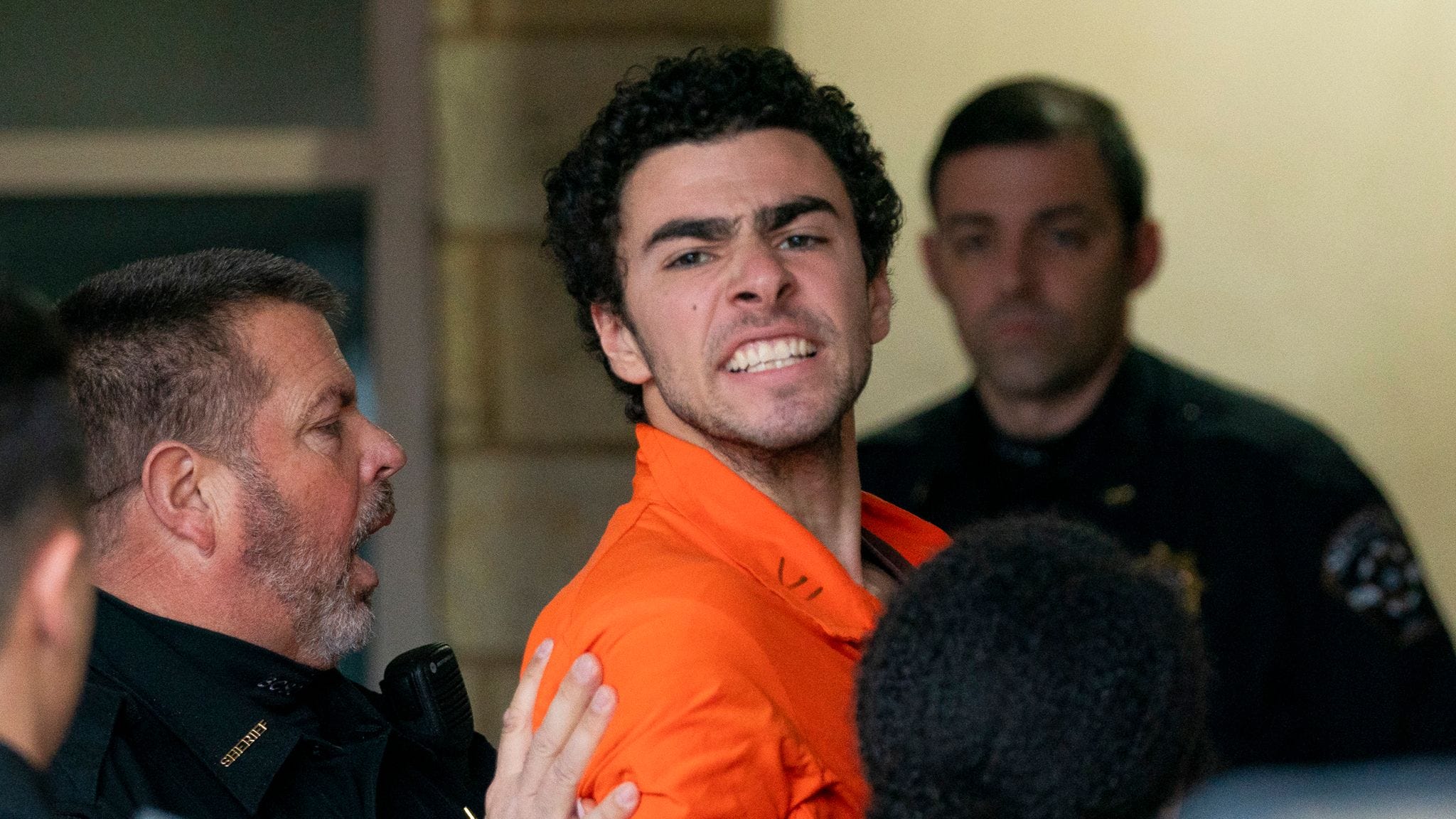
Shocking events often dominate the headlines in a country as vast and varied as the United States. The latest such incident involved the high-profile assassination of United Healthcare CEO Brian Thompson, gunned down in broad daylight by, of all people, a once young and promising Ivy League graduate. Security cameras, now ubiquitous in our world, gave us all a front-row seat at the killing. When stunning events like this occur right before our eyes, it’s a jarring moment that feels like a crack has opened in the very foundation of our society. As shocking as these seemingly random events might be, given human nature and the sheer number of us sharing this space called America, they appear to happen often. It’s an uncomfortable fact, but tragic and unsettling events like this are also statistical inevitabilities. Why?
Simple Math
With a population of 330 million people in the United States, each with an average lifespan of about 75 years, even if just 1% of us were to commit a serious crime, engage in a catastrophic act, or accidentally set harmful events in motion just once in our lifetime, the math points to 44,000 such devasting incidents every year. That breaks down to an average of 121 such incidents every single day. To put this into perspective, that’s five incidents every hour—or one every twelve minutes. These numbers aren’t conjecture; they’re rooted in probability. And they paint a sobering picture of why, grieving these dreadful moments as we do, we shouldn’t be surprised when seemingly random acts of chaos occur.
Is it possible that a figure of 1% of the population going haywire or lashing out at the world at some point in their lives is too high? Well, consider that around 20% of American adults (1 in 5) will experience a diagnosable mental health condition in any given year. 1 in 20 (5%) will experience a serious mental illness each year. As the population gets older, nearly half of all adults in the U.S. will develop a mental illness such as Alzheimer’s or dementia. But half of all mental disorders begin by the age of 14, 75% by age 24. Tragically, suicide is the second leading cause of death among children 10-14 years of age. If life were a grand pinball machine, 1% of us doing something to “TILT” it is probably too low.
From Headlines to Reality
The tragic shooting of Brian Thompson, a senseless and horrific act, sent shockwaves through the healthcare and corporate worlds. It is easy to view this as an unusual tragedy—a deviation from the norm. But moments like this, big and small, are part of a larger, complex tapestry of human unpredictability. A soap opera actor named Jessie Smollett fabricates a hate crime that unravels into an elaborate hoax. A highly respected Wall Street investor named Bernie Madoff masterminds the largest known Ponzi scheme in history. Thomas Cook and Ryan Routh, once unknown to all of us, each woke up one morning recently wanting to change the course of history by assassinating Donald Trump. Jose Ibarra, a 26-year-old illegal migrant, murders unsuspecting Laken Riley when she’s out on a jog. Former New York Congressman George Santos is expelled from Congress for fabricating a life not lived.
While the motives behind each story vary greatly—from greed or personal gain to psychological distress or criminal intent—infamous incidents such as these stem from the same broader undercurrent of human frailty, imperfection, and, unfortunately, the evil that flows through the human experience.
Countless, lesser-known events in our lives fit the pattern. A local principal embezzling school funds, a neighbor setting fire to an apartment complex over a dispute, or a driver with road rage who kills another—are examples of the random yet impactful day-to-day ways in which the statistical certainty of catastrophic human behavior manifests itself.
Why It Happens
The reasons behind these acts are as diverse as the population itself. Mental health struggles, economic despair, social alienation, immorality, or just plain opportunity can push people to commit unthinkable acts. Tragically, these things happen, but given their probability, we should not be surprised when they do. America is one of the greatest places on Earth, where freedom, liberty, and individuality are highly valued. Our emphasis on personal freedom allows for greater expression of both the best and worst aspects of human behavior. Coupled with freedom of the press, which ensures that even the most bizarre and random acts receive widespread attention, it’s no wonder the U.S. often seems to go off the rails.
The statistics back this up. In 2023, the FBI reported 1,218,467 violent crimes. Averaged out, that’s 3,338 per day. There were 385 mass shootings in 2024 and 81 school shootings. In 2022, the country saw 24,849 homicides and 49,000 suicides. Accidental deaths paint a similar picture: 995 people died in railroad accidents in 2023, 42,514 were killed in car accidents in 2022, and 227,039 died from an assortment of other accidental causes the same year. Thirty-three people found themselves in the wrong place when lightning struck in 2023. Three hundred fifty-eight people got on the wrong airplane at the wrong time in 2022 and lost their lives as a result. The sheer scale and breadth of life’s unpredictability drive the numbers when so many people are involved.
We are the Answer
As we grapple with these unsettling statistics, particularly those involving criminal acts, it’s important to understand that even the most robust law enforcement efforts at the national or local level will never completely prevent such incidents from happening. Policing and security measures can mitigate risks, but they can’t erase the unpredictable nature of human behavior. In a country the size of America, randomness isn’t just possible—it’s guaranteed. While we can’t predict or prevent every tragic act, we can best understand and address them from a broader context on a local level. Instead of succumbing to fear and the inevitability of chaos driven by large numbers nationally, we can channel our efforts into building communities that focus on minimizing the factors driving these incidents closer to home. What are the building blocks? Family. For many, faith. And, importantly, a much greater focus on mental health.
Family members and friends are often the first to notice changes in behavior or signs of distress in their loved ones. By staying engaged—listening, watching, and stepping in when necessary—families can play a critical role in preventing potential tragedies. Speaking up, blowing the whistle, or seeking help for someone in crisis might feel daunting, but involvement can make all the difference. Communities built on strong familial ties and mutual accountability are our best defense against the randomness of catastrophe. For every act of chaos, countless acts of kindness, generosity, and courage go unreported. The real solution lies in ensuring that good people get involved—one act, one day, at a time.